The scientific work carried out over the last few decades has made a major contribution to our understanding of the nature and impact of climate change.
These changes, which are taking place in territories, are creating new socio-economic, environmental, political and cultural challenges that societies must face up to if they are to make the necessary transitions in terms of mitigation and adaptation quickly and effectively. On a regional scale, the search for ‘possible solutions’ is intended to be an interdisciplinary approach at the interface between science and society.
At a time when 75% of the world’s population lives close to the coast, mobilising and comparing the knowledge of the various stakeholders in coastal and estuarine environments is a key factor in anticipating and resolving the challenges of tomorrow.
The Gironde estuary, an altered ecosystem.
The Gironde estuary is a highly productive interface between the continental and marine realms, subject to significant anthropogenic pressures which, in addition to and modulating the effects of climate, are transforming its dynamics, biodiversity and landscapes.
The research work carried out on the Gironde estuary over many decades, summarised in the book ‘L’estuaire de la Gironde: un écosystème altéré?’ (The Gironde estuary: an altered ecosystem?), has made it possible to share a remarkable amount of knowledge and to highlight the challenges for the future.
The speed and complexity of these changes call into question our ability to consider collectively (science and society) the links between humans and the estuary in order to anticipate impacts and changes and identify possible development trajectories on the scale of estuary territories.
A project at the interface between science and society
What changes will accelerated global warming bring? What are the consequences for estuarine areas? What are the emerging research questions?
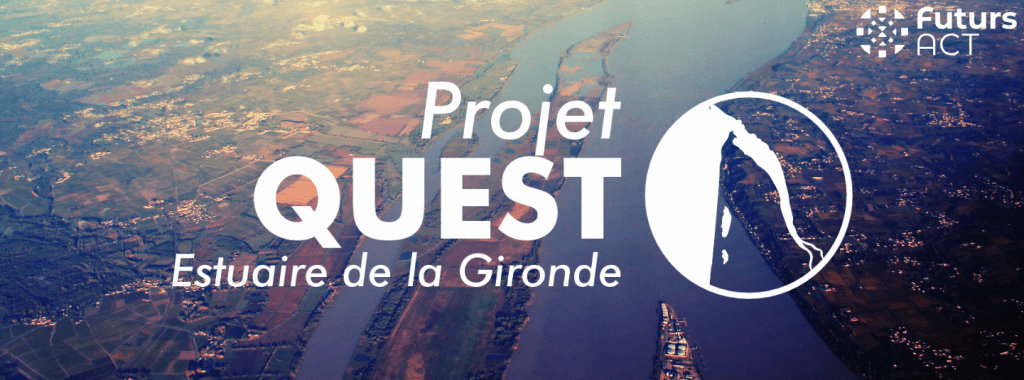
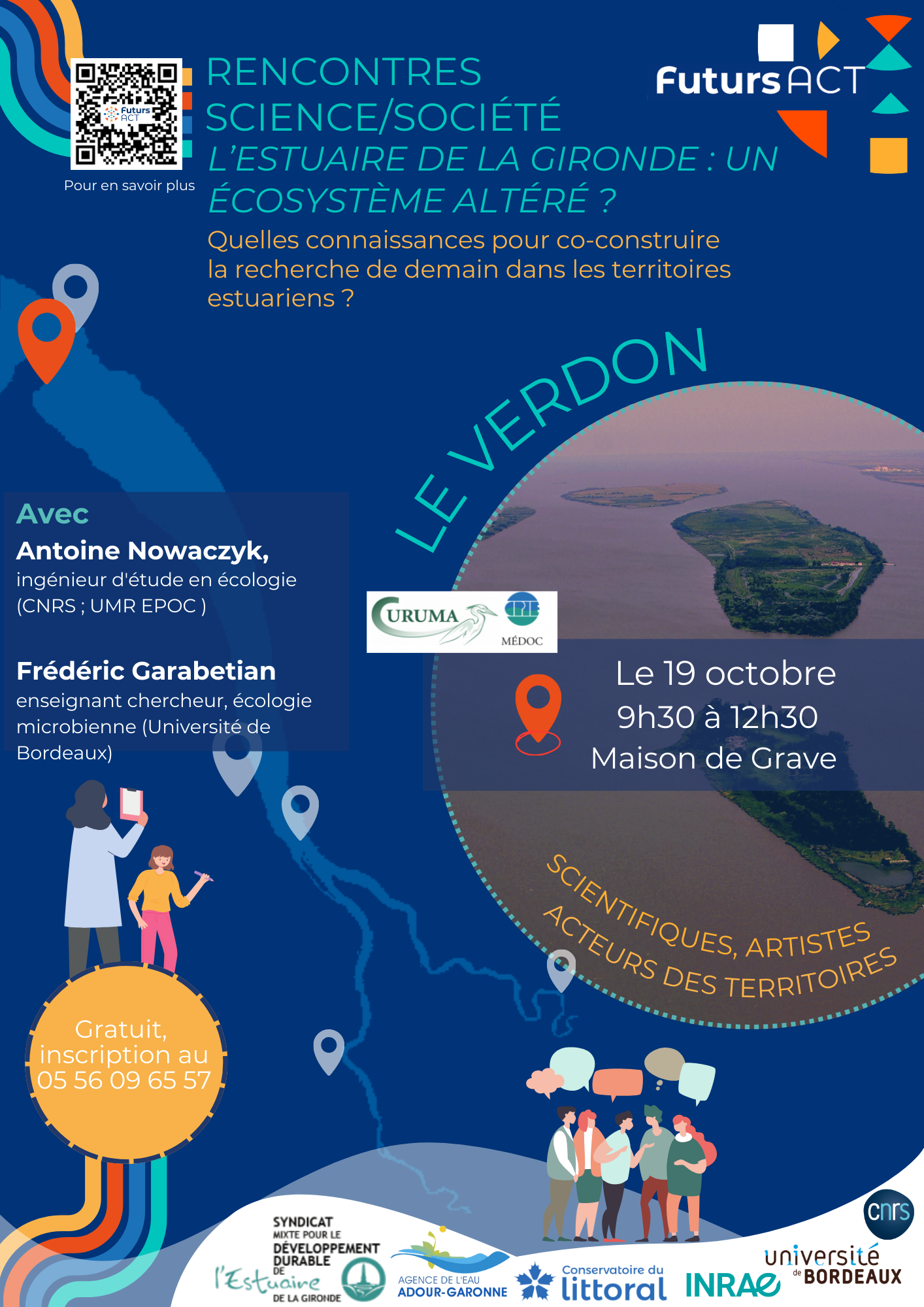
The co-construction of future research questions and the identification of possible levers for action at local level require the acquisition of a shared culture between research players and local players (citizens, stakeholders, political representatives, etc.). It is through an inclusive science-society approach that the QUEST project is proposing a series of six estuary-wide meetings (Royan, Le Verdon, Blaye, Pauillac, Bordeaux and Libourne) to strengthen the science/society link through the sharing of knowledge, questions, specific issues and barriers identified on the scale of estuary territories.